SportsAdda CMS

Blog

  • England’s batting woes come home to Root in West Indies

    England’s batting woes come home to Root in West Indies

    England’s lack of top-order runs finally caught up with them during a spectacular series loss in the West Indies. 

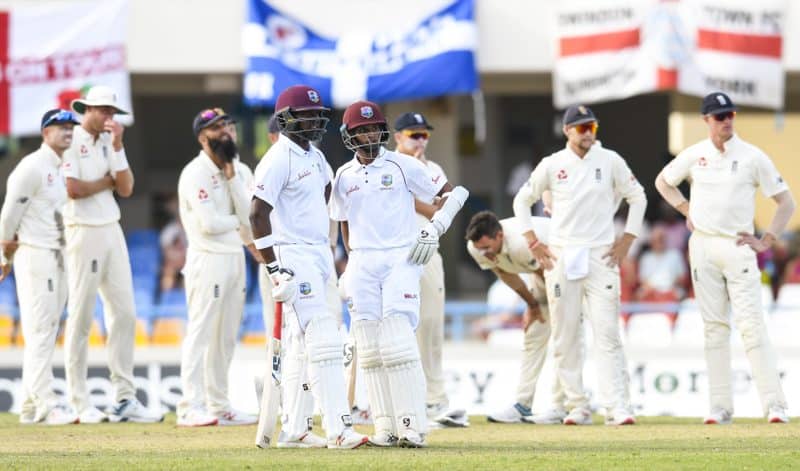
    A colossal 381-run defeat in the first Test in Barbados was followed by Saturday’s 10-wicket thumping in Antigua where, in a reversal of cricket stereotypes, the West Indies grafted hard for their runs while England produced yet another ‘calypso collapso’ display.


    Randy Brooks/ AFP

    No one better exemplified the difference than West Indies batsman Darren Bravo, whose 331-minute fifty, spanning 215 balls on a lively Antigua pitch, was the third slowest Test half-century in terms of time.

    By contrast, England’s second-innings 132 lasted only 38 more balls more than it took Bravo to get to fifty.

    Prior to arriving in the Caribbean, the all-rounders in England’s XI repeatedly bailed them out of top-order collapses in a home series win over India before they won away to a weak Sri Lanka. 

    Yet only once in seven home Tests in 2018 season did England reach the benchmark total of 400 and not once in Sri Lanka did they make 350.

    As for the ongoing series in the Caribbean, with next week’s third and final Test in St Lucia to come, England’s meagre scores of 77, 246, 187 and 132 have left their bowlers with an all-but impossible task.

    Too often the England top-order’s response to challenging bowling has been to try to hit their way out of trouble in the manner that has made them one of the favourites for this year’s 50-over World Cup on home soil.

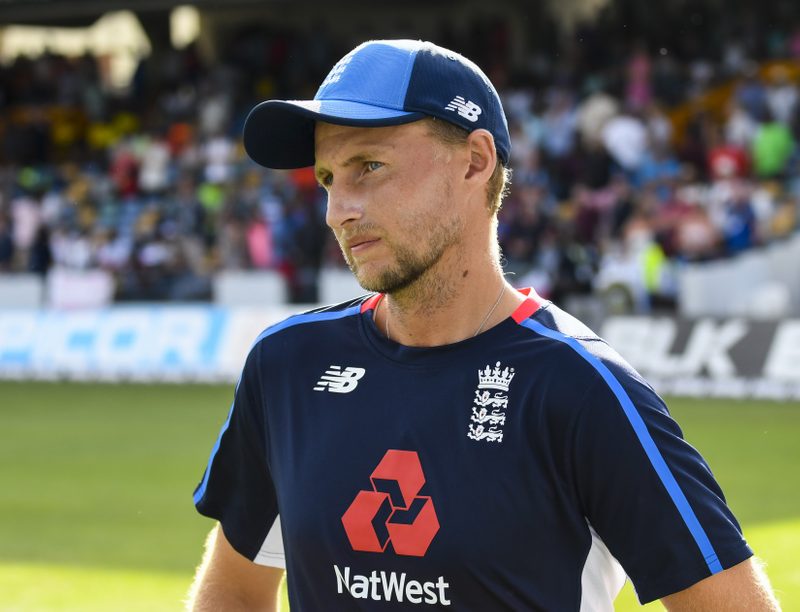
    England captain Joe Root, speaking after losing in Antigua with more than two days to spare, admitted: “Scoring under 200 in both innings isn’t going to win you many games of cricket.”

    Yet for all Root grew up in Yorkshire, where cussed defensive skills made a local hero out of England opening great Geoffrey Boycott, he refused to read the riot act to his batsmen — in public anyway.

    “I think we have got to be better at what we do, or maybe do things slightly differently. The choice comes down to the individual,” he said.

    Root is the only member of England’s top six with a Test batting average over 40.

    ‘Fundamental problem’ 

    By contrast the decision of Alastair Cook, their all-time leading Test run-scorer, to retire from international duty at the end of the 2018 season was the latest example in recent years of a batsman averaging over 40 departing the England scene.

    “The skill of Test match batting is adapting your game plan to suit the pitch,” wrote Cook in his Sunday Times column.

    “Batting for time, making the opposition bowlers come to them — that was surely the way to go last night,” the former England captain added.

    Nasser Hussain, Cook’s Essex and England predecessor, believes the structure of English county cricket is working against the development of top-order batsmen.

    “The red-ball game is being played predominantly in April and May, and then right at the end of the summer, on spicy pitches with a Duke’s ball,” Hussain told Sky Sports.

    “We have a fundamental problem in England in that we are not producing top-quality number three batsmen. We are not producing a batsman who can play that innings that Darren Bravo played for Windies.”

    Hussain added: “England haven’t won previous series because of their batting line-up, they’ve won despite of it. 

    “You can have as long a batting line-up as you want but if you’ve not got fundamental batting skills of seeing off the new ball, of batting long, you will struggle.”

    Lloyd wants more warm-ups 

    Another issue, not just for England, is the modern lack of warm-up fixtures either before or during a series in which players can adjust to local conditions — a key aspect of Test cricket.

    Tests have traditionally been a matter singular for the two teams involved and host boards have often been accused of providing weak tour opponents in order to maximise home advantage.

    Yet Cricket West Indies offered England a first-class warm-up game against a good Board XI only for the tourists to decide two two-day practice matches were adequate preparation.

    This year, however, sees the launch of the International Cricket Council’s World Test Championship and Clive Lloyd, the captain of the hugely succesful West Indies side of the mid-1970s and early 1980s, believes the global governing body should insist on proper warm-up Fixtures to preserve the status of their pinnacle format.

    “I’m saying to the ICC if they want to improve Test cricket we have to play more of these warm-up games,” Lloyd told the Cricketer magazine.

    “Tests are finishing in three and four days and that is because some of the players are ill-prepared.”
  • Rayudu to the rescue as India wrap up series

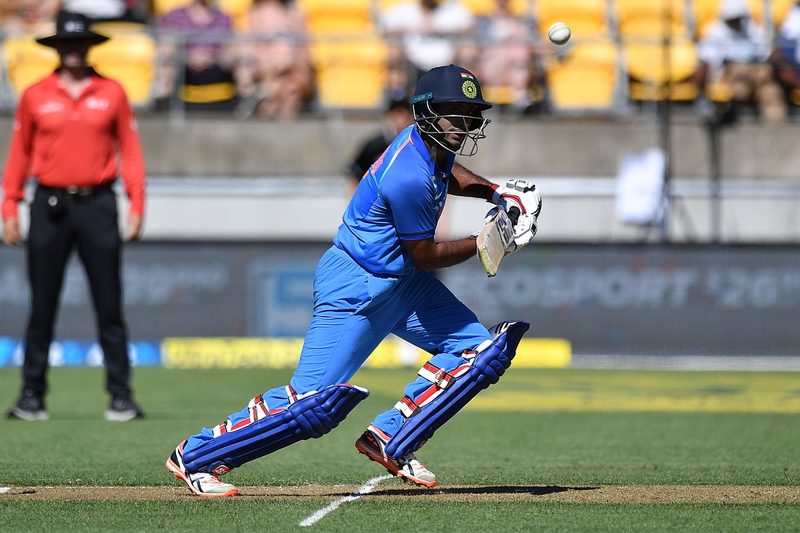
    Rayudu to the rescue as India wrap up series

    A commanding knock of 90 by Ambati Rayudu rescued India from deep trouble and saw them beat New Zealand by 35 runs in the fifth one-day international in Wellington on Sunday to wrap up the series 4-1.

    Captain Rohit Sharma admitted he took a gamble — and Rayudu made sure it paid off — when he opted to bat first instead of playing to India’s run-chasing strength.

    Marty Melville/ AFP

    They made a disastrous start and were four for 18 before Rayudu, with help from Vijay Shankar, steered the side to 252 and New Zealand in reply were all out for 217.

    “That partnership was crucial,” Sharma said.

    “It was not easy after losing four wickets at the start and then to build that partnership and get to a decent total, I thought 250 was a really good score on that pitch.”

    India went into the match with an unbeatable 3-1 lead in the series and looking to atone for their sole loss, an eight-wicket defeat in the previous match.

    “If the series was on the line I would have batted second, it’s our strength to chase but we wanted to test ourselves, how we bat,” Sharma said.

    “We required guys to show character and they came out and showed a lot of character today.”

    Four months out from the World Cup the series highlighted the gulf between second-ranked India and third-ranked New Zealand.

    It did look as if India were heading for another defeat when Matt Henry and Trent Boult ripped out the first four wickets in under 10 overs. 

    But when the swing bowlers were taken out of the equation, Rayudu and Shankar toyed with the attack, putting on 98 for the fifth wicket before Shankar was run out at 45.

    Rayudu, who faced 84 deliveries to reach 44, needed only 27 more for his remaining 46 runs in an innings that included eight fours and four sixes. 

    He had a life on 60 when dropped by Boult and was eventually removed when Henry, New Zealand’s most successful bowler, came back for his second spell. 

    Hardik Pandya provided late fireworks for India with 45 off 22 deliveries, while Henry finished with four for 35.

    New Zealand batted through to the 45th over, which captain Kane Williamson described as “a step in the right direction” after being comprehensively beaten in the first three games of the series.

    “Throughout the series they had us under more pressure than we would have liked,” Williamson admitted.

    “Trying to soak that up with the ball, in the field, with the bat, and revert it back on the opposition we were able to do that on occasions but not often enough.”

    Like India, New Zealand’s top order also went cheaply, before a 67-run stand by  Williamson (39) and Tom Latham (37) for the fourth wicket.

    But after they went in quick succession Yuzvendra Chahal led a spin assault that saw the hosts all out for 217, with Chahal taking three lbw decisions for 41.

    James Neesham threatened to get New Zealand up to their target when he whacked 44 off 32 deliveries before inexplicably running himself out.

    When India fruitlessly appealed for a leg before decision, Neesham stepped out of his crease in search of a possible leg bye, unaware the ball had been picked up by wicketkeeper MS Dhoni who had an easy shot at the stumps.

    The series now moves on to three Twenty20 matches beginning in Wellington on Wednesday.

  • Khawaja smacks century as Sri Lanka chase massive 2nd Test total

    Khawaja smacks century as Sri Lanka chase massive 2nd Test total

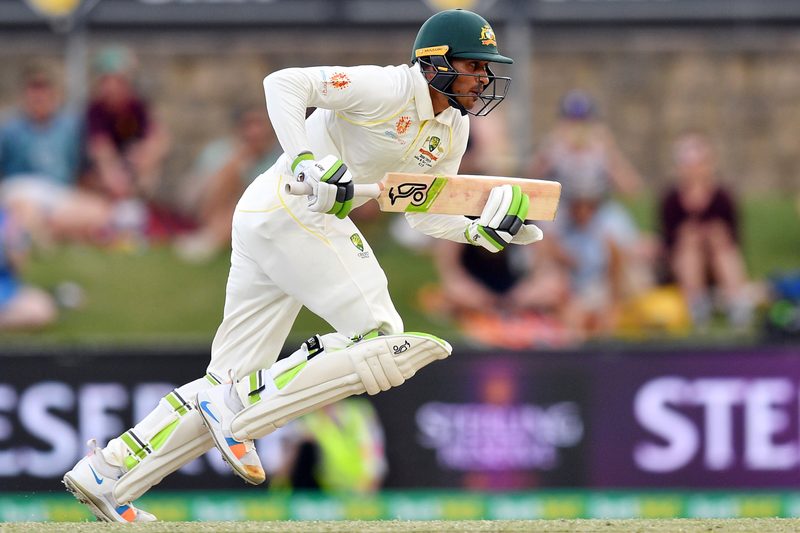
    Usman Khawaja finally found form again to stroke a fine century Sunday and steer Australia into a massive lead over Sri Lanka as the tourists battle to stay in the second Test at Canberra.

    At stumps, the visitors were 17 without loss, chasing a huge 516 to win with two days remaining after Tim Paine declared Australia’s second innings at 196 for three.

    Dimuth Karunaratne and Lahiru Thirimanne were both unbeaten on eight, weathering some 30 minutes before bad light stopped play slightly early.

    Saeed Khan/ AFP

    Sri Lanka had resumed the third day at 123 for three and in a hostile morning session lost four wickets and Kusal Perera, who retired after being hit on the head by a bouncer.

    Their resistence folded in the second over after lunch, with Mitchell Starc taking five wickets to leave them trailing by 319 after Australia’s first innings 534 for five declared.

    Paine opted against the follow-on in Australia’s last Test batting opportunity before the Ashes tour to England later this year.

    Khawaja padded up knowing his place in that squad was in doubt after managing a high-score of just 72 across six Tests in a lacklustre summer.

    He responded in emphatic fashion, smashing his eighth Test ton off 134 balls. 

    “Obviously getting a hundred and setting up another game that we can hopefully win, that’s the ultimate feeling for the team and for myself,” said Khawaja, who admitted it had been a tough few months on and off the field.

    His brother was charged in December with trying to influence a witness over a case where he allegedly framed a love rival with a fake terror plot.

    “It made it tougher to try and concentrate and go out and execute my skills,” he said, adding that it had been “very taxing mentally”.

    It was Australia’s fourth century of the match after Joe Burns, Travis Head and Kurtis Patterson reached the milestone in the first innings.

    Paine declared with Khawaja on 101 and Head not out 59, following his first innings 161.

    But it was far from plain sailing. Marcus Harris again failed, out for 14 with Kusal Mendis taking a superb diving catch at slip off Kasun Rajitha, throwing his Ashes place into question.

    Mendis held another catch to dismiss Burns for nine, this time off Vishwa Fernando, and Rajitha struck again to remove Marnus Labuschagne for four.

    In an incident-packed morning, Jhye Richardson and Pat Cummins opened with a slew of bouncers.

    Both Perera, who resumed on 11, and Dhananjaya de Silva, on one overnight, took blows to the head in the opening two overs.

    Perera was then hit flush on the helmet ducking into a Richardson ball on 27.

    The neck protector flew off and a physio rushed to his aid. He continued and added two more runs only to call the physio again four balls later.

    Once again he opted to bat on but was feeling the effects and was helped off the field soon after.

    Karunaratne returns 

    Ironically, the courageous Karunaratne replaced him after being declared fit again after being felled by a brutal bouncer on Saturday from Cummins.

    He had laid prone on the ground for at least 10 minutes before being stretchered off in a neck brace, but after a hospital check was cleared of concussion and given the OK to resume his innings.

    The opener returned on 46 and brought up his 22nd Test 50 before being caught at Patterson off Starc after adding nine more.

    He was out just three balls after de Silva bizarrely hit his own wicket while attempting a pull shot off Starc. As his bat swung around it took one of the bails off and he was gone for 25.

    The tail was quickly polished off with Starc doing the damage, ending with 5-54 to silence his critics after a lean spell.

    “Certainly was a great start we had and we thought we could get a very reasonable score in the first innings.” Sri Lankan bowling coach Rumesh Ratnayake said.

    “But things happened that didn’t help us and we are really disappointed with what they got.”

  • Bangladesh’s Taskin ruled out of New Zealand tour

    Bangladesh’s Taskin ruled out of New Zealand tour

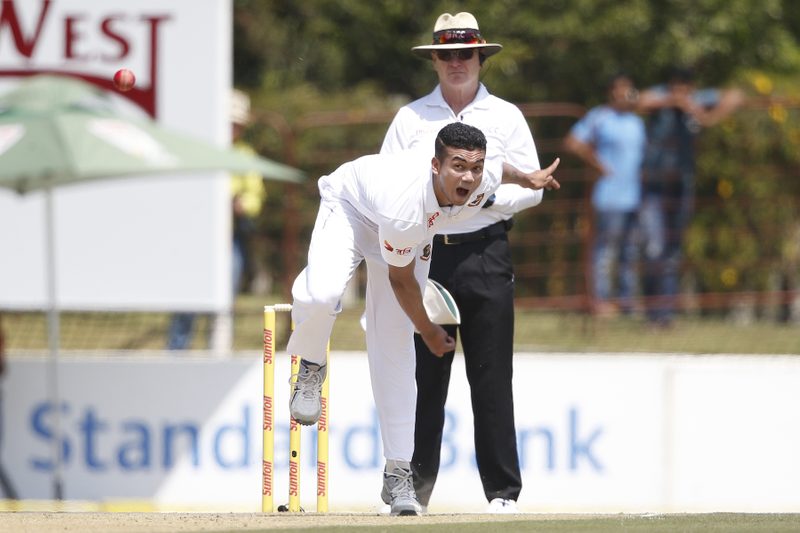
    Bangladesh’s tour of New Zealand this month suffered a blow Sunday after pace bowler Taskin Ahmed was ruled out of the series with an ankle injury by the team doctor.

    Ahmed was recalled into the side’s one-day international and Test squads after an impressive show for the Sylhet Sixers in the Bangladesh Premier League Twenty20 tournament.

    Gianluigi Guercia/ AFP

    He was the competition’s leading wicket-taker with 22 scalps until an injury against Chittagong Vikings on Friday.

    “Taskin tore a ligament in his left ankle. He will be in complete rest for three weeks and then we will review his situation,” Bangladesh Cricket Board physician Debashish Chowdhury told AFP.

    “He is definitely ruled out of the New Zealand tournament as this kind of injury usually takes a long time to heal,” he added.

    Chief selector Minhajul Abedin said a replacement for Ahmed had not yet been decided.

    Bangladesh will play three ODIs and three Test matches in New Zealand between February 13 and March 20.

    Bangladesh failed to win any matches during their last New Zealand tour in 2017-18.

  • Azam’s 90 in vain as Pakistan lose T20 series winning streak

    Azam’s 90 in vain as Pakistan lose T20 series winning streak

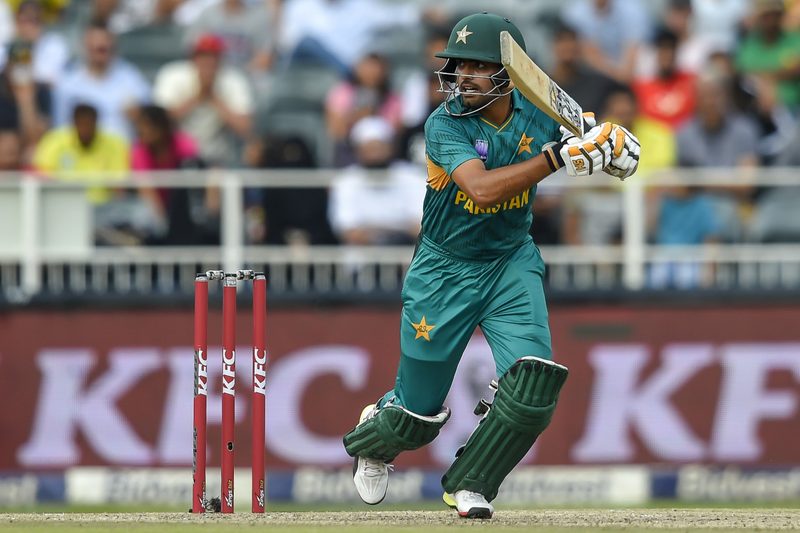
    Babar Azam hit a majestic 90 but Pakistan’s long streak of series wins came to an end in the second Twenty20 international against South Africa at the Wanderers Stadium on Sunday.

    South Africa took a winning 2-0 lead in the three-match series with a dramatic seven-run win. Pakistan had not lost a T20 series since they were eliminated from the World T20 in India in March 2016.

    Christiaan Kotze/ AFP

    Pakistan were on track to overhaul South Africa’s 188 for three until Azam was out off the first ball of the 17th over. It started a collapse in which six wickets fell for 34 runs in four overs.

    The contrast between the two innings was stark. South Africa started slowly but stand-in captain David Miller plundered an unbeaten 65 off 29 balls as the hosts scored 127 runs off the last ten overs, including 29 off the final over bowled by Usman Shinwari.

    Pakistan scored rapidly at the start of their innings, with Azam hitting the first three balls off Beuran Hendricks for four. It was 70 for one at the end of the six-over power play –- 26 runs ahead of South Africa’s total at the same stage.

    Azam and Hussain Talat (59) put on 102 off 75 balls for the second wicket.

    “We had the game but we couldn’t finish it,” said Pakistan captain Shoaib Malik.

    The tempo of the game changed when Azam pulled a slower ball from Beuran Hendricks to deep midwicket after hitting 13 fours and a six in a 58-ball innings.

    “We didn’t start too well with the ball,” said Miller, who was named man of the match. “We were too short and too wide but the bowlers pulled it back.”

    Although neither took a wicket, Miller praised left-arm spinner Tabraiz Shamsi and new fast bowler Lutho Sipamla for economical bowling in the middle overs before the late-innings collapse.

    Miller, captaining South Africa for the first time because Faf du Plessis was rested for the last two matches of the series, hit five sixes and four fours in an explosive innings, which followed a similarly aggressive 45 off 27 balls by Rassie van der Dussen, who hit four sixes.

    South Africa made a relatively sedate start on an unusually slow, dry Wanderers pitch. Left-arm spinner Imad Wasim, who opened the bowling, took one for nine in four overs. He bowled a maiden to new opening batsman Janneman Malan, who had an otherwise promising innings of 33 off 31 balls.

    Left-arm fast bowler Shinwari conceded 63 runs off his four overs.

  • West Indies fight back against England

    West Indies fight back against England

    West Indies fought through a tough second day of the second Test against England and rode their luck to edge ahead of their opponents at the Sir Vivian Richards Stadium in Antigua on Friday.

    Having dismissed the tourists for 187 in their first innings on day one, the hosts, starting the morning at 30 without loss, reached stumps at 272 for six, a lead of 85 runs with four wickets in hand with two established batsmen – Darren Bravo and captain Jason Holder – at the crease.

    Randy Brooks/AFP

    Bravo’s display of patience and discipline in getting to 33 not out after four hours at the crease typified the West Indies effort against a purposeful England bowling attack led by the aggressive but desperately unlucky Stuart Broad.

    Broad, surprisingly dropped for the first Test in Barbados which the Caribbean side won by a record home margin of 381 runs, left his teammates wondering what could have been a week earlier as he led the England effort with figures of three for 42 off 28 overs.

    Seaming the ball away sharply and getting exaggerated bounce from a green, uneven surface, the pacer should have enjoyed more success as two clear catches were put down off his bowling while he repeatedly beat the batsmen’s edges without getting the reward he deserved for his perseverance.

    Moeen Ali, topscorer with 60 on day one, underlined his all-round value to the England cause with two wickets in the afternoon session when the tourists enjoyed a period of dominance and threatened to dismiss the West Indies before the end of the day.

    Ali accounted for Kraigg Brathwaite caught at short-leg for the innings topscore so far of 49 by substitute fielder Keaton Jennings to break a 63-run second-wicket partnership with Shai Hope.

    He then added the important wicket of Shimron Hetmyer, the flamboyant left-hander attempting to repeat a heave for six earlier in the over but miscuing for James Anderson to take an excellent catch running in from the long-off boundary.

    Exasperated by his lack of success in the morning, Broad was finally rewarded with the dismissals of Hope and Roston Chase in the same over when play resumed after lunch. Hope looked threatening on 44 when he was caught behind while Chase was left helpless by a delivery which barely got off the ground before clattering into his stumps.

    Bravo, the only West Indies batsman to fail in both innings of the first Test, held firm with wickets falling around him until Shane Dowrich joined him in putting on exactly 50 for the sixth wicket.

    Dowrich became Broad’s third wicket for a battling 31, the only success England enjoyed with the second new ball in the final session of play.

    “I think we deserved more than six wickets but we kept going, and that’s good for the team,” said Broad of the England effort on a frustrating day for them. “We’re still in the game. There’s a lot of fight left in that changing room.”

    At the start of the day Brathwaite and John Campbell extended their opening stand to 70 with Campbell getting to 47 before his luck ran out.

    Reprieved within minutes of the start of play by a television review of an umpiring decision which was shown to be erroneous, the left-hander was then dropped by Jos Buttler at slip before top-edging an attempted pull just out of the reach of scampering substitute wicketkeeper Jonny Bairstow at backward square-leg.

    Bairstow is continuing to do duty behind the stumps as the appointed gloveman, Ben Foakes, receives treatment for a blow on the hand from fast bowler Shannon Gabriel while compiling a hard-fought 35 runs on day one.

    Campbell’s moments of good fortune were all at Broad’s expense.

    It took the introduction of Ben Stokes into the attack for the opening pair to be separated as Campbell pushed at another delivery angled across him and Buttler atoned for his previous error with a catch every bit as straightforward as the one missed earlier off the suffering and increasingly aggravated Broad.

  • Mental health issues force Pucovski out of Australia Test squad

    Mental health issues force Pucovski out of Australia Test squad

    Cricket Australia chief executive Kevin Roberts Saturday defended the handling of young batting prospect Will Pucovski, who has left the Test squad to deal with mental health issues.

    The Victorian, who turned 21 on Saturday, smashed a superb 243 for Victoria against Western Australia this season, which saw him parachuted into the national setup for the two Tests against Sri Lanka.

    But he was overlooked for the first one in Brisbane and again missed out on selection for the second Test currently being played in Canberra.

    Ishara S.Kodikara/ AFP

    Pucovski travelled with the squad to the nation’s capital but has now been released to return home to Melbourne.

    “He reported some challenges over the past few days, and the decision has been made that the best thing for Will’s welfare is for him to return home to Melbourne,” Cricket Australia doctor Richard Saw said in a statement.

    “Will has been proactive in this process and while he has made significant progress, he feels this is the best course of action to get ready to play cricket for Victoria.”

    Saw said the decision to release him had been made in consultation with his family, Cricket Australia’s medical staff and Cricket Victoria.

    “Will’s decision to speak up and continue to ask for assistance in managing his ongoing mental health is extremely positive,” he said.

    Roberts defended bringing him into the squad in the first place, given he suffered similar mental health issues in the past.

    “We’re handling the situation with care. Will has been really mature about it,” Roberts told broadcaster ABC.

    “It is really important to note the support Will has had around him through the team doctor, psychologist in the team, and also the national network of support we’ve got with player development managers in every state.”

    Despite Pucovski being in the squad and tipped to start in Brisbane, selectors opted to call up Kurtis Patterson at the last minute after he struck two centuries against Sri Lanka in a warm-up game.

    Roberts denied this sparked the issues with Pucovski.

    “It wasn’t Will’s wellbeing or his challenges with that that saw him not play in the Gabba Test, it was because we had a bloke called Kurtis Patterson who played supremely well and scored twin unbeaten hundreds,” he said.

    “I’m comfortable with how that played out but at the same time I acknowledge not everyone will agree with me.”

    It is not the first time Pucovski has struggled with mental health issues.

    After his 243, he took a long break and later told reporters: “It was one of those things where what it looked like from the outside wasn’t quite matching up with what it was on the inside.

    “I was more confused than at any other time in my life,” he added.

  • Karunaratne stretchered off as Sri Lanka chase big Australia total

    Karunaratne stretchered off as Sri Lanka chase big Australia total

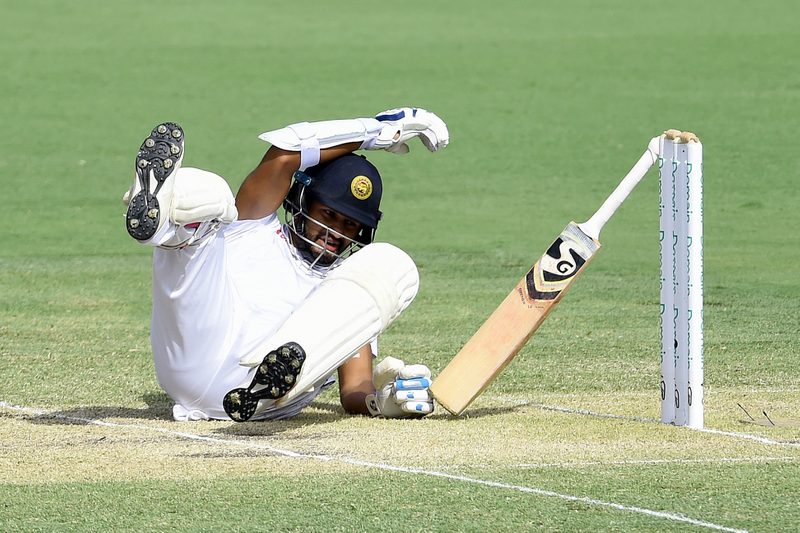
    Opener Dimuth Karunaratne was rushed to hospital after a frightening blow by a bouncer on Saturday as Sri Lanka chased a massive Australian first innings total built on the back of three centuries.

    In overcast conditions, the home team resumed day two of the second Test in Canberra on 384 for four and extended their lead to a massive 534 for five when skipper Tim Paine declared.

    Ishara S.Kodikara/ AFP

    At stumps, Sri Lanka were 123 for three in reply with Kusal Perera on 11 and Dhananjaya de Silva not out one.

    Paine’s declaration looked premature given the ease with which Sri Lanka’s openers weathered the new-ball attack led by under-pressure Mitchell Starc.

    On a flat Manuka Oval track Karunaratne and Lahiru Thirimanne saw off some lightning quick deliveries and a bouncer barrage and had built an 82-run stand before disaster struck.

    Playing in his 58th Test, Karunaratne was 46 not out when a rising Pat Cummins ball glanced off his shoulder and onto his helmet, close to the neck area.

    He slumped to the ground, dropping his bat as Australian players ran to assist. 

    A doctor and physio sprinted onto the ground and called for more medics and after some 10 minutes, he was put on a stretcher and taken off the field on a golf buggy.  

    Cricket Australia said he complained of pain in the neck and tingling to the hands and was ferried to hospital.

    Coach Chandika Hathurusingha said later he was in “good spirits” and “in no danger”.

    “It hit on the back of the neck so he is being assessed,” he added.

    It clearly unsettled Thirimanne who fell to spinner Nathan Lyon for 41 in the next over, caught by Usman Khawaja at slip.

    Cummins then clean-bowled Kusal Mendis for six and when captain Dinesh Chandimal gloved a Starc ball to Paine behind the stumps for 15, the tourists were in trouble.

    “We lost a couple of wickets afterwards so it was definitely a distraction.” admitted Hathurusingha. 

     From drought to flood 

    The impressive Kurtis Patterson was not out 114 and Paine on 45 at the declaration with Vishwa Fernando the pick of the Sri Lankan bowlers with 3-126.

    After being dropped on his first ball, Patterson, who earned a debut in the first Test at Brisbane after hitting 157 and 102 for a Cricket Australia XI in a warm-up against Sri Lanka, never looked back.

    The New South Welshman shored up his credentials ahead of an Ashes tour to England later this year by bringing up his maiden hundred with a drive to mid-off for three after starting the day on 25.

    “It’s another nice milestone. I’ve played that innings in my mind ever since I was a little boy,” said Patterson.

    “More importantly, it just put the team in a position to win another Test match.” 

    Following a century drought stretching back to October when Khawaja scored 141 against Pakistan in Dubai, it turned into a flood in Canberra with three players bringing up the magical mark.

    Opener Joe Burns punished the inexperienced Sri Lankan attack on Friday in a 308-run stand with Travis Head (161), carrying his bat through the day.

    But he only lasted five overs Saturday after resuming on 172, adding eight runs before chopping a delivery from quick Kasun Rajitha onto his stumps.

    He trudged off dejected after missing a glorious chance to notch a first Test double century against a team missing its three first-choice pace bowlers — Suranga Lakmal, Lahiru Kumara and Dushmantha Chameera — through injury.

    Burns’ departure brought the consistent Paine to the crease, who kept the pressure on the visitors, still reeling after being beaten at the first Test in Brisbane by an innings and 40 runs.

    At the other end Patterson grabbed his chance with both hands, smashing 14 fours and a six in his breakthrough knock.

    Patterson was prefered for Brisbane and Canberra to young batting prospect Will Pucovski, who was released from the squad late Friday to deal with mental health issues that have plagued him in the past.

  • Du Plessis, Hendricks end Pakistan winning streak

    Du Plessis, Hendricks end Pakistan winning streak

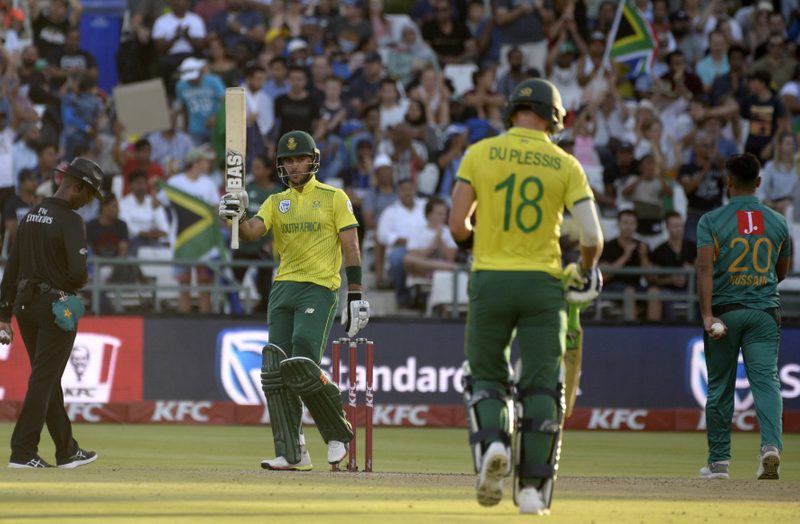
    Faf du Plessis and Reeza Hendricks shared a record partnership as South Africa ended a nine-match Pakistan T20 winning streak in the first international at Newlands on Friday.

    South Africa prevailed by six runs in a tense finish after being sent in and making 192 for six.

    Pakistan came close, scoring 182 for nine.

    Rodger Bosch/AFP

    “We were two boundaries behind,” said Pakistan captain Shoaib Malik.

    In the end, it was the fielding of David Miller that made the difference. His two direct-hit run-outs, including the key wicket of Babar Azam, and a South African record four catches, meant that Pakistan kept losing wickets as they chased a challenging target. Miller was named man of the match.

    Du Plessis hit 78 off 45 balls and shared a record second-wicket stand of 131 off 74 balls with Hendricks, who made 74 off 41 deliveries.

    Du Plessis said at the post-match presentation that he would not play in the remaining two matches, citing the need to rest ahead of two Test matches against Sri Lanka, starting on February 13.

    “It will be a great opportunity for a new captain,” he said but did not reveal who, in an inexperienced team, the new leader would be.

    Du Plessis’s dismissal in the 16th over sparked a mini-collapse. South Africa lost five wickets while scoring only 35 runs in the last 28 balls of the innings. It was the highest total in a T20 international at Newlands but Hendricks admitted at the innings break that South Africa had “lost our way a bit” after seeming to be on course for a total of around 220.

    Left-arm fast bowler Usman Shinwari dismissed Du Plessis and Rassie van der Dussen in the same over and finished with three for 31.

    Pakistan made a fast start despite losing Fakhar Zaman in the first over. Babar Azam (38) and Hussain Talat (40) put on 81 off 61 balls for the second wicket. At one stage they were scoring at close to 10 runs an over but the scoring slowed against tight bowling by medium-pacer Andile Phehlukwayo and left-arm spinner Tabraiz Shamsi.

    The match turned in South Africa’s favour when Talat was caught off Shamsi, to be followed in the next over by Babar’s run out, after a superb piece of fielding by Miller.

    Malik kept Pakistan in the game, scoring 49 off 31 balls before he was dismissed off the third ball of the final over.

    “Overall we played well,” said Malik, “but South Africa were good in all three departments. 

    Du Plessis said he was always confident of winning but admitted: “They are a very composed, experienced T20 team. Being so dominant for a lot of games, obviously, they are very confident. They are a very good team. We did some really good things tonight.”

  • Top performers in the Women’s Big Bash League

    Check out the top five batters on the ALL CRICKET APP. Link in bio.